Welcome to Action Education Switzerland

In the Borgou department of Benin and in the Savanes region of Togo, exclusion from education is becoming more widespread under the combined pressure of poverty and cross-border security tensions. To address this educational emergency, Action Education is rolling out the «Tous à l’école» project. Scheduled to run for two years (2026–2028), this initiative aims to enrol and ensure the long-term retention of more than 46,000 children in the primary education system, whilst addressing the root causes of school dropout.
A worrying finding at the heart of areas of tension
In Benin and Togo, these are more than 300,000 children aged between 6 and 11 who are currently deprived of their fundamental right to education (UNICEF, 2021). This widespread exclusion leaves them directly exposed to major risks: child labour, forced marriage, various forms of exploitation and recruitment into armed groups.
In these border areas, the deteriorating security situation is leading to increasingly large-scale forced displacement of populations, putting further strain on school infrastructure that is already stretched to breaking point. In 2025, there were more than 43,000 displaced persons or refugees in northern Benin and more than 61,000 displaced persons in northern Togo (UNHCR, February 2025).
- In Benin, some 200,000 children aged between 6 and 11 are not in school (UNESCO, 2022), of which 40.7 % are concentrated in the Borgou department alone (UNICEF, 2021).
- In Togo, more than 100,000 children aged between 6 and 11 remain outside the school system (UNESCO, 2022). The Savanes region, where the poverty rate stands at 64 % (World Bank, 2024), accounts for 34 % of these excluded children on its own.
The field survey carried out by Action Education in June 2025 reveals that the local authorities targeted by the project face a level of social exclusion that is significantly more acute than national averages suggest.This extreme economic hardship forces many families to make difficult choices to ensure their household’s daily subsistence, to the detriment of their children’s education.
Challenging common misconceptions: understanding the real factors behind social exclusion
The study carried out by Action Education helps to dispel a common misconception: No, the lack of school attendance is not due to a lack of interest or a fundamental disengagement on the part of parents towards school. In reality, families are deeply committed to their children’s education. However, when faced with poverty, they find themselves forced to prioritise immediate basic needs and income-generating activities.
The indirect costs associated with schooling — the purchase of school supplies and uniforms, and in particular membership fees for Parents’ Associations (APE) — represent an insurmountable financial barrier for many low-income households. Dropping out of education is therefore the result of structural economic constraints.
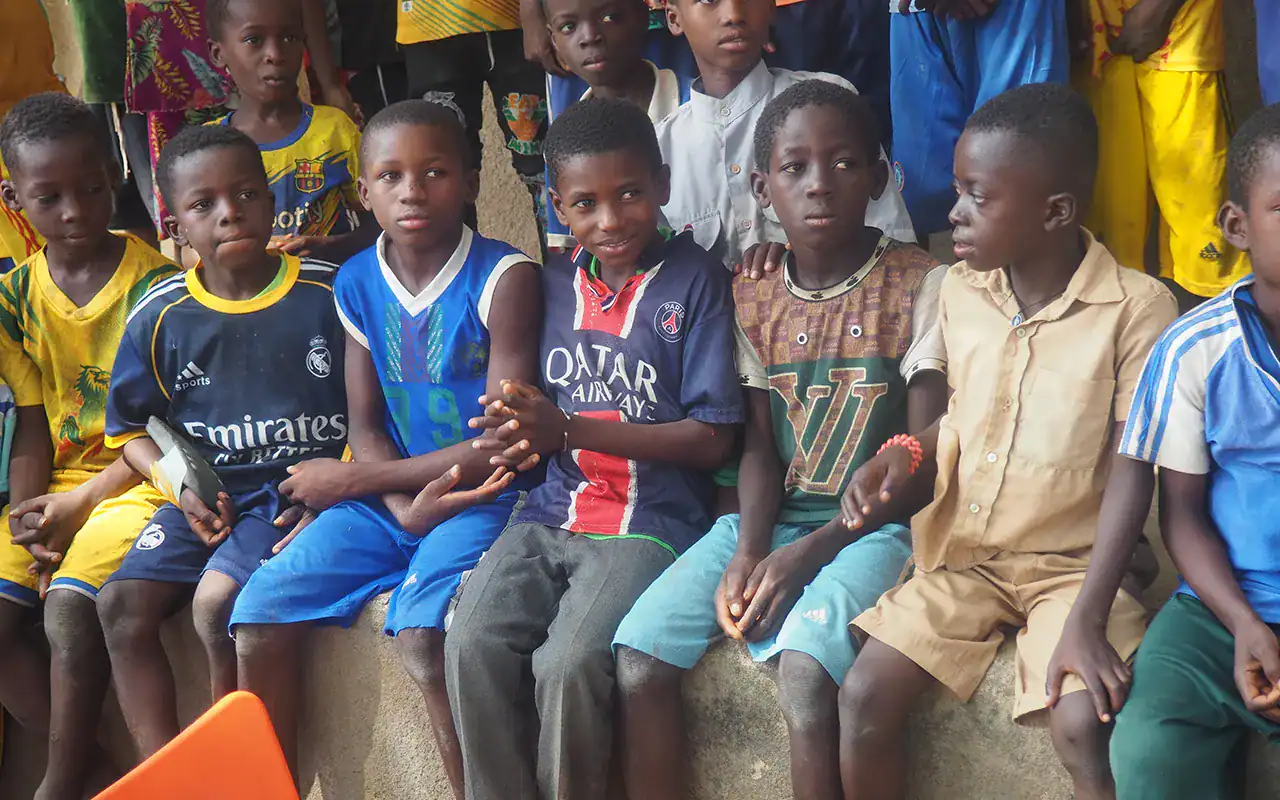
Beyond poverty, exclusion from education stems from a range of closely interlinked systemic factors:
- Gender stereotypes: during times of economic crisis, the value placed on girls’ education diminishes further, making gender inequality the leading cause of out-of-school children in Togo and the third leading cause in Benin.
- The lack of civil registration: the absence of birth certificates creates an insurmountable administrative barrier to official registration and sitting examinations.
- The stigma surrounding disability: children with disabilities face both negative social perceptions and a glaring lack of suitable infrastructure or facilities.
- Remote locations and a lack of infrastructure: the distances involved and limited transport capacity restrict physical access to these facilities.
- Insecurity and forced displacement: migration patterns and population movements make it difficult to monitor children’s schooling and increase the risk of them dropping out.
Over 30 years of commitment: an approach that has proven its worth in practice
Operating in Togo since 1986 and in Benin since 1993, Action Education draws on its extensive practical experience, having already successfully delivered more than twenty projects in the region. The organisation has developed methodological approaches tailored to local circumstances, such as support in obtaining birth certificates to overcome administrative barriers, or the roll-out of alternative educational models (mobile schools, accelerated learning centres).
The «Tous à l’école» project is a direct continuation of successful initiatives such as’TAKE ACTION in Benin and ACT Africa (Benin, Togo, Senegal), as well as the «Écoles Relais» catch-up programme set up in Togo. These schemes have amply demonstrated their effectiveness in ensuring that marginalised children attend school, preventing school drop-outs and promoting a truly inclusive education for people with disabilities.
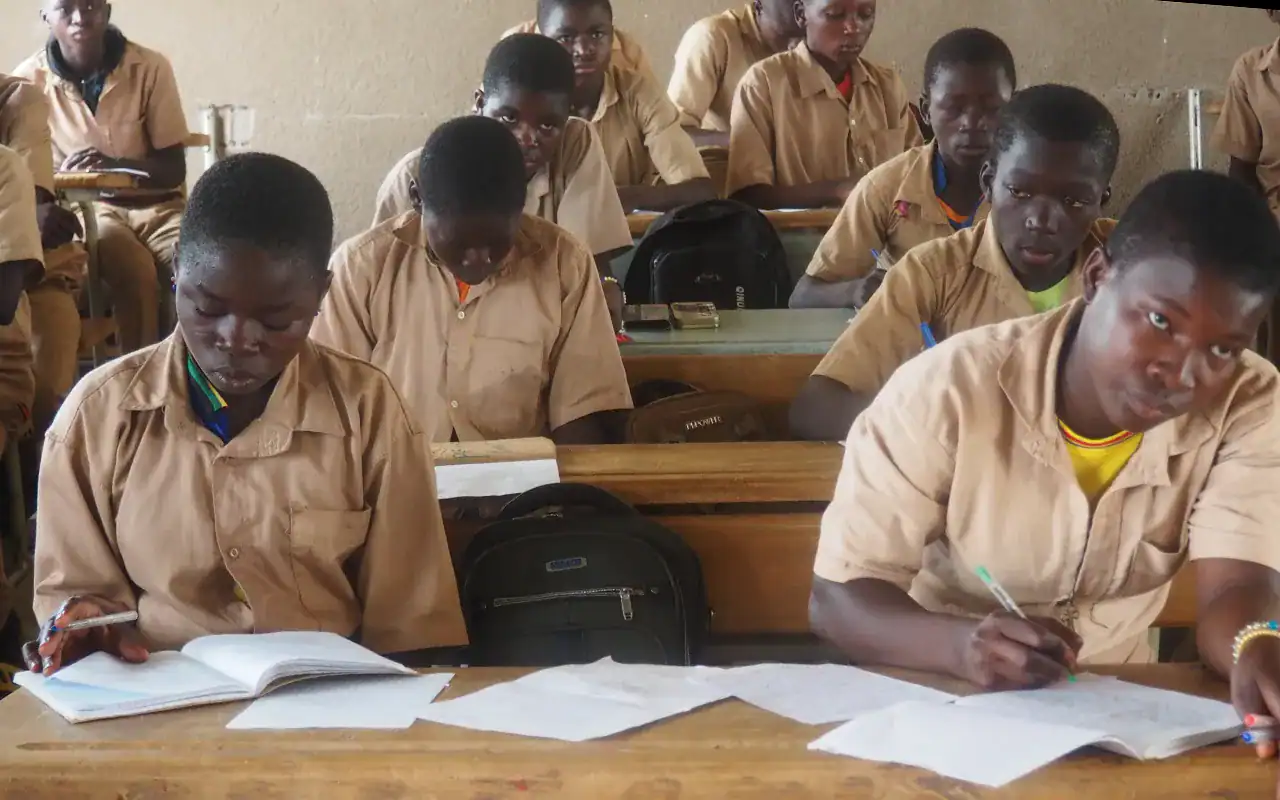
A comprehensive programme structured around four key areas
With support from the French Development Agency (AFD) and the host countries, the project «Tous à l’école» will run from 2026 to 2028 in 500 selected primary schools in the Borgou department of Benin and the Savanes region of Togo.
In total, the initiative will directly benefit 46,770 children and have a positive impact on more than 350,000 people at the heart of their communities.
The programme is based on an integrated strategy:
- Getting children to school and keeping them there: practical support (provision of school kits, covering school fees, support for school meals) and specific support for marginalised, displaced or disabled children (provision of mobility aids, psychosocial support).
- Enabling pupils to catch up: building and refurbishing schools that meet inclusivity standards, combined with fast-track catch-up programmes to reintegrate children who have dropped out of school.
- Improving the quality of teaching: large-scale continuing professional development for teachers and school leaders in inclusive teaching, equitable classroom management and tutoring.
- Tackling school drop-out rates: direct involvement of local organisations in preventing pupils from leaving school and regularly monitoring school attendance.
Focus on the roll-out in Togo: tackling the root causes of school drop-out
In Togo, the project will cover 250 primary schools spread across the five target municipalities in the north. The project plays a crucial strategic role in tackling early school leaving in these areas.
Narzoume Tchingue, Country Director for Action Education in Togo, highlights the gravity of the situation:
«Data from the Ministry of National Education and our field surveys conducted in June 2025 reveal a striking finding. Whilst the enrolment rate stands at 89.6 %, the primary school completion rate has plateaued at 70.66 %. It is therefore evident that nearly 20 % of pupils drop out before completing primary school. This situation is tending to worsen due to the recent migration of young people from the Savanes region.»Narzoume Tchingue, Country Director for Action Education in Togo

In order to reverse this trend in Togo, the project will target 14,830 children through an initial component focusing on the integration and reintegration of children outside the school system, supplemented by a second component on school retention and the prevention of school drop-out, aimed at ensuring educational continuity.
A partnership-based approach for lasting impact
The sustainability of the results depends on close consultation with the entire educational and social ecosystem. Action Education works hand in hand with local authorities, in particular the Ministries of Education and Social Affairs, as well as Parents’ Associations (APE).
The main impacts envisaged upon completion of the project:
- Inclusive, sustainable and equitable access to provide education for 40,000 children not currently in school, thereby improving their chances of success.
- Strengthening local skills through the prevention and early intervention in cases of school dropout.
- Improving the quality and inclusiveness of educational provision, incorporating tailored psychosocial and educational support to help children thrive within the school system.
By building local capacity, transforming schools into safe and supportive environments, and removing economic and social barriers, The «Everyone to School» project puts the right to education for every child, without distinction, into practice.
Supporting Action Education goes beyond a simple act of generosity: it is a firm commitment to education and to building a fairer and more equitable world.