Welcome to Action Education Switzerland

On this International Day for the Protection of Education from Attack, the situation is alarming: attacks targeting educational facilities have soared by 44% worldwide. For Action Education Switzerland, protecting the right to education of vulnerable children, refugees and displaced persons remains an absolute priority.
From Cambodia to Togo, via Benin, our teams are implementing practical initiatives on the ground to ensure the continuity of education where it is most under threat.
Education under attack: the urgent need for action
Established by the UN in 2020 to be observed every 9 September, the International Day for the Protection of Education «Against Attacks» is now in its 7th edition. This year’s chosen theme, ‘Can education survive attacks? The resilience of human communities’, highlights a growing threat: all too often, schools are no longer the safe haven they should be.
According to recent reports from the United Nations and UNESCO, the situation continues to worsen. Figures from the Global Coalition to Protect Education from Attacks (GCPEA) show 8,566 targeted attacks over the period 2024–2025, marking a very sharp increase compared with the 6,000 incidents recorded during the 2022–2023 period. To date, nearly one in six children worldwide (473 million) are living in an area affected by armed conflict, and at least 52 million of them are no longer in any form of education.
In the face of this global crisis, Action Education emphasises that a child’s education is not an option, but a fundamental, inalienable right that is essential for ensuring peace and the reconstruction of societies.
In Cambodia: keeping children in education despite the impact of successive crises
In the Cambodian context, the education system faces a twofold challenge: dealing with the aftermath of a major cross-border conflict and coping with the economic impact of distant international tensions. One year on the escalation of border tensions between Cambodia and Thailand, which forced more than 640,000 people into exile, the impact on schoolchildren remains profound. By the summer of 2026, there were still more than 20,000 displaced people unable to return home. The violent clashes in the provinces of Oddar Meanchey, Banteay Meanchey and Preah Vihear destroyed entire villages and devastated school infrastructure.
To maintain links with schools, Action Education responded swiftly in coordination with local partners. Together, we set up 207 temporary classrooms as well as mobile libraries, directly benefiting more than 36,000 pupils. At the same time, we distributed more than 23,800 educational kits (school supplies, clothing, textbooks and bicycles) to cover travel costs and provide basic learning materials. More than 4,000 children affected by the trauma of war received dedicated psychological support, whilst digital learning modules were set up within the camps.

Portrait of Sreymich
Sreymich’s journey: school as a beacon of hope
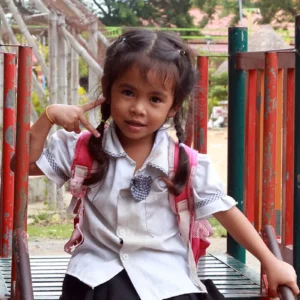
Among these thousands of stories, that of Sreymich, aged 12 (a Year 5 pupil), is a testament to remarkable resilience. After her home was destroyed by air strikes, her family was forced to flee. As they moved from place to place, the young girl attended five temporary schools. Despite the material losses, the distance and the loss of her familiar circle of friends, Sreymich did not miss a single day of school and rose to second place in her class. For her, school represents an essential foundation that she carries with her wherever life takes her.
«Armed conflicts do far more than destroy buildings: they shatter the sanctuary of the classroom and rob children of their future. Education must be protected in all circumstances. It is our responsibility to support families until they can rebuild their lives with dignity.»
Samphors Vorn, Director of Action Education in Cambodia

Training boats on Tonlé Sap Lake: the economic shockwave
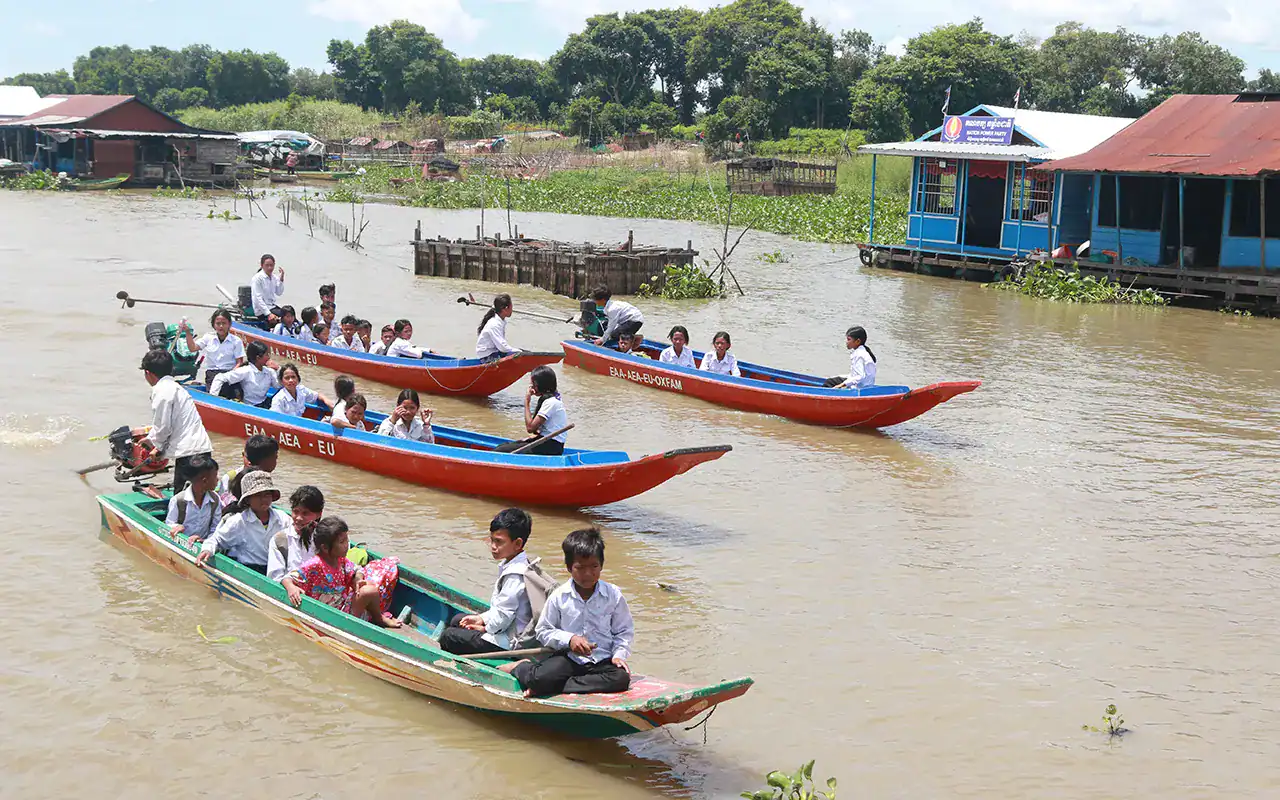
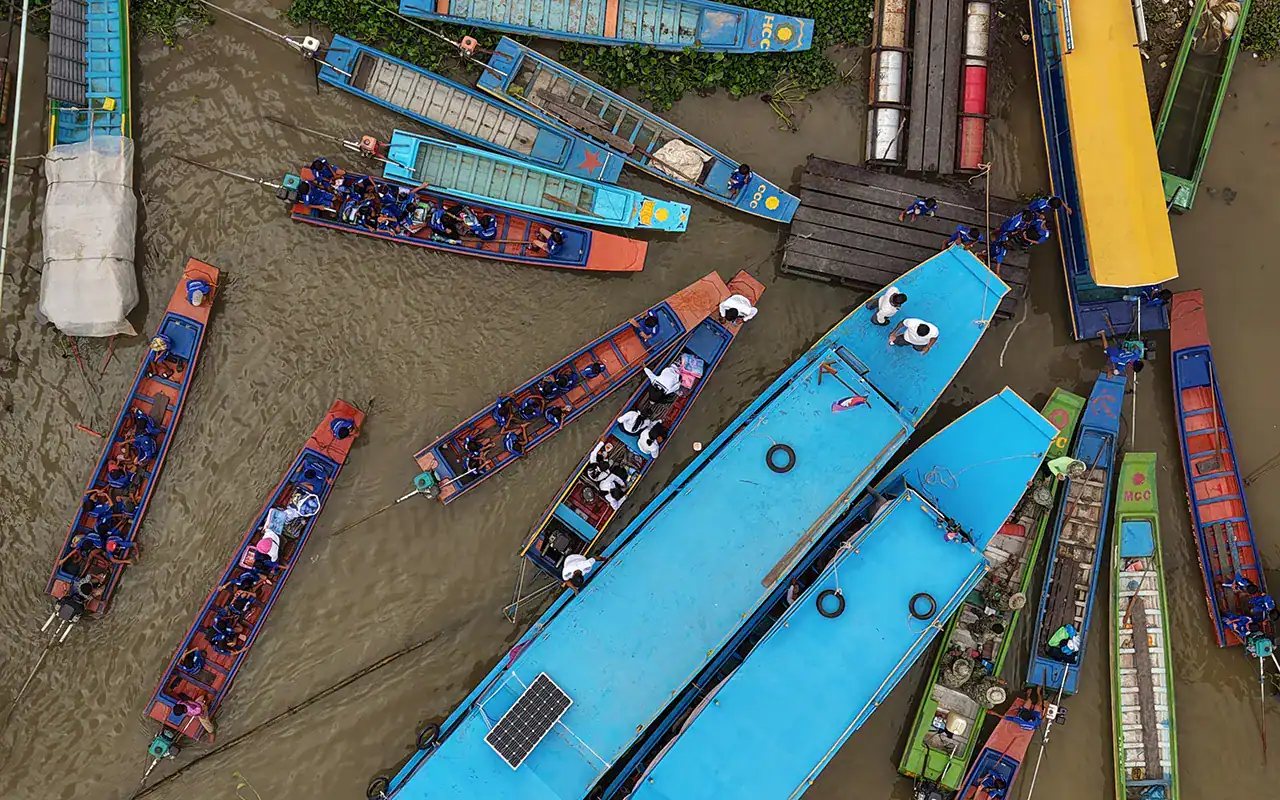
On the waters of Tonlé Sap Lake, communities living in floating villages are facing yet another indirect crisis. The conflict in Iran has caused a sharp rise in global fuel prices, making travel by canoe extremely expensive. This price rise is hampering the journeys of pupils and teachers, whilst also complicating the operation of solar-powered equipment. To support these isolated communities, Action Education maintains its presence at over 100 floating schools and libraries.
Benin and Togo: safeguarding the right to education through the «Everyone to School» project»
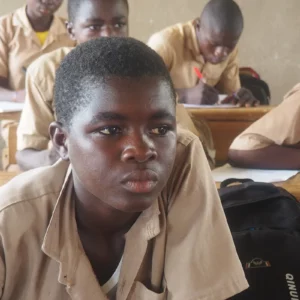
In the northern regions of Benin and Togo, the deteriorating security situation is causing significant instability. The violence has led to the displacement of more than 43,000 people in Benin and 61,000 in Togo. Compounded by extreme poverty – with the poverty rate rising to 64% in the Savanes region – this insecurity is keeping more than 300,000 children aged between 6 and 11 out of school.
To tackle this critical situation, Action Education is rolling out the regional programme «Everyone to School» (2026–2028). The aim is to work with 500 primary schools to ensure that 46,000 vulnerable children can continue their education in the long term.
An action plan based on four strategic priorities
- Removal of technical barriers: Supply of equipment, provision of financial contributions, support for school canteens and targeted support for displaced children or those with disabilities.
- Introduction of remedial programmes: Refurbishment of suitable premises and refresher courses to help pupils who have dropped out of school re-enter education.
- Improving teaching practices: Continuing professional development for teaching staff and school leaders in inclusive teaching methods and fair classroom management.
- Tackling school drop-out rates: Involvement of local committees in monitoring pupil numbers and preventing pupils from dropping out of school.
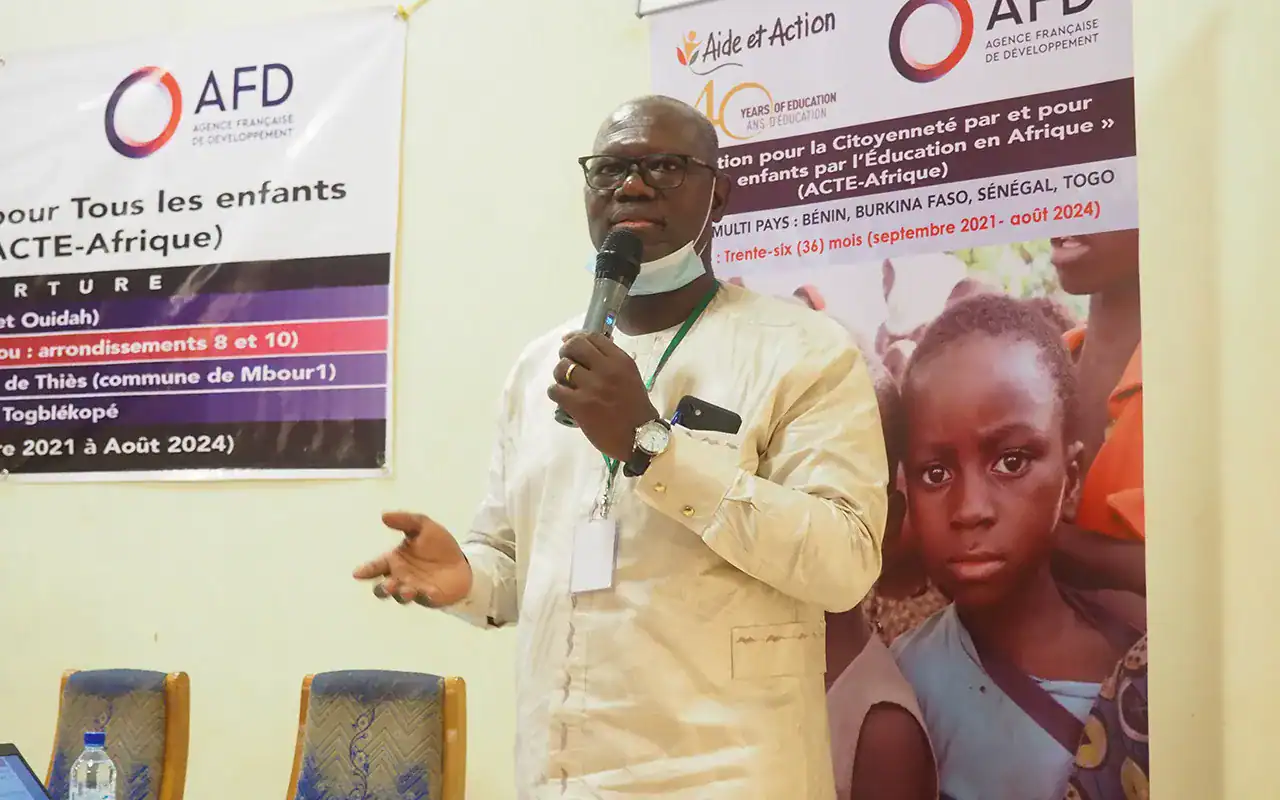
«Data from the Ministry of National Education and our field surveys conducted in June 2025 reveal a striking finding. Whilst the enrolment rate stands at 89.6%, the primary school completion rate is capped at 70.66%. It is therefore evident that nearly 20% of pupils drop out before completing primary school. This situation is tending to worsen due to the recent migration of young people from the Savanes region.»
Narzoume Tchingue, Country Director for Action Education in Togo
School: a bulwark of protection and a force for peace
In each of its areas of activity, Action Education Suisse emphasises that the role of schools goes far beyond the acquisition of knowledge: it provides an essential shield. It protects the youngest children from child labour, forced marriage and recruitment by armed groups, whilst promoting equality between girls and boys. On this day of action, Action Education Switzerland urges international bodies and political leaders to make schools safe havens. Protecting schools means guaranteeing every child the fundamental right to grow up, learn and build their future in complete safety.